Tuesday, July 20, 2010

Changing Landscapes

It is amazing how the farm is changing so quickly now: new crops ripening and ready for harvest while older plantings are finishing up and being pulled out to make room for new plantings.With all the changes, it's impossible to just sit back and marvel in the beauty of what is growing. I am always looking on to the next thing. It's Summer but my mind is on cooler weather while I plan for Fall harvest and winter cover crops.

But, I am drawn back into the present by the pace of life on the farm right now.We are well into our summer harvesting: lemon and pickling cucumbers, patty pan summer squash, zinnias and sunflowers! And our heirloom tomato plants have beautiful green fruit on them.

Heat loving spinach for, hopefully, an August harvest

Tomotillos filling out their husks. I'll have plenty of recipes available to use up these deliciously, sweet green tomatoes. 

Acorn Winter Squash

Teddy Bear Sunflowers

Sunday, July 4, 2010

Last week in pictures

Thanks to my family that spent one of their vacation days to help out on the farm. We got so much done!

Friday, June 25, 2010

Buckwheat: some for me and some for the bees

When I tilled up the plot of land I'm using there was one section that was still pretty wet, so having been worked while wet, turned into hard clods. By hand, I was unable to break the clods with any efficiency, so decided to just run the seeder full of buckwheat seed over the section. I had no idea if the seed would germinate as it fell down through the clods of hard soil.
Well, it did germinate and less than 1 month later I have this:


Buckwheat is used as a quick summer cover crop, usually planted early in the summer and tilled in before a late summer crop planting. It provides excellent organic matter since it grows very tall very quickly. I plan to just allow this planting to re-seed itself (maybe 3 times?) and hopefully improve soil structures for next Spring. Possibly, even Fall planted garlic. In the meantime, it is also attracting bees and other pollinators as well as providing shelter for a new family of killdeer birds.


The bees LOVE buckwheat, but beware it drives them a little crazy. While working on the farm in Maryland I was able to take a bee keeping course and attend to the hives on the farm. I learned that while Buckwheat is in bloom, your bees will be more irritable. I do not know why this is, but it may have something to do with frustration that this delicious flower only provides them nectar in the morning. I love watching bees and feel a necessary, but beneficial calm come over me when I am in a hive. The order and intelligence with which they work to provide for their society is awesome. And so important that we spread the word about bee health. A major issue in the news the past few years has been this idea of "colony collapse disorder". I believe the accuracy of this term is disputable, but there is certainly a decline in bee populations.

One cause of this may that the bees are stressed, and for a number of reasons:
            * Most of the "raised" bees are overworked. They are shipped from one mono-crop farm to another on massive trucks expected to pollinate whatever is in season at the time. So it could be a month of strawberries, to a month of apples, to a month of blueberries. They are not allowed the diversity they (and we) expect for nutrition.
            * In some regions of the US "wild" hives of bees are surrounded by "mega" farms, providing them with limited options at the same time as overwhelming them with pesticides. Some beekeepers will even say it is the development of the genetically modified seed with pesticide and herbicide right in it that is poisoning the bees.They say this new strain of seed is producing plants with systemic insecticides, and this concentration is putting too much stress on the bees.

So, lets start gardens EVERYWHERE and raise bees in them. Lets raise bees in urban gardens and on city rooftops! Most states have regional bee keeping associations that give classes and assistance with getting started.

Tuesday, June 15, 2010

First week of markets

We have gotten through our first week of markets, and we had a blast! It felt so good to see family and friends come out and give support. We have appreciated the compliments, constructive criticisms, and encouragement to get us through the rest of the season. Thank you all!

Now is the time to start gearing up for this week's markets and revisit the crop plan to make sure all succession plantings are accurate. I am really looking forward to the onset of root crops, squash, and tomatoes, but we will be predominantly harvesting greens, radishes, and turnips for market this week.

Here's hoping for our first sunny market day!

Monday, June 7, 2010

Getting ready for Market #1

This Wednesday will be the first market for our growing farm. We have been busy getting all harvest and market materials ready, weeding beds for easy harvest, all while still putting transplants and seeds in the ground. The inch and a half of rain last week has done wonders for the growing plants, as well as sparing us the task of watering.
For the first market we will have: a Mesclun Mix that includes 4 varieties of lettuce and 3 varieties of greens, Tender Arugula, Salad Turnips, Spicy Radishes, Cilantro, Swiss Chard, and a Brazing mix that includes red russian kale, spicy mustard, and a variety of asian greens. We will also have our handspun yarns for sale at the market.

We hope to see you all this Wednesday at the Westcott Community Center (Corner of Euclid Ave and Westcott St) 2-7pm. Stop by and say hi, we would love to see you!


Thursday, May 20, 2010

Do slugs drink beer?

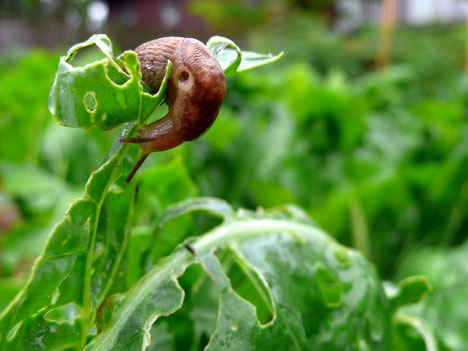
Remember when we planted no till potatoes and I talked about the inevitability of slugs since we used so much straw? Well, the good news is that those potatoes are starting to poke through the straw (!!), but the bad news is that there are many slugs just waiting to munch on those unsuspecting tubers.

 This is a picture of a very happy slug...taken by a very unhappy gardener. 

I have already found slug damage on the swiss chard, which made me think it was time for a beer. Not for me...for the slugs. Placing wide mouth, shallow bowls with beer around the garden can keep slugs away. They are attracted by the beer and slime their way into the bowl, where they drown. I will check first thing in the morning to see how many slugs were trapped over night. I will have to keep the beer fresh, at least while the plants are small and susceptible. Check back for updates on the slug eradication efforts!

**Disclaimer: No craft micro-brew was injured on this mission.

Tuesday, May 11, 2010

Carrots love Tomatoes

Especially "Angela's 'Nelson' Carrots".

(Photo courtesy of Johnny's Select Seeds)

I am planting 4 varieties of carrots this year: Mokum and Nelson are classic orange carrots. And, Purple Haze and Deep Purple are dark purple carrots. I am especially excited for the purple carrots, although I love talking about "My Nelson Carrots". I have already sown 2 succession plantings and am not happy with the spotty germination. I even had row cover over them to aid in germination and lightly watered on most days. Someday I will try the burlap method of germinating carrots. Right after seeding, you lay burlap over the bed. The burlap allows light and water through, at the same time as keeping soil moist and soft for those tiny seeds. Once the carrots germinate, pull back the burlap, taking larger weeds with it, leaving behind beautiful rows of carrots. This cuts down on the weeding too!
I decided, today, to plant more carrots in the tomato beds. I sowed 2 rows on either side of the tomatoes. This may result in way more carrots than I can harvest, wash, sell or eat.